
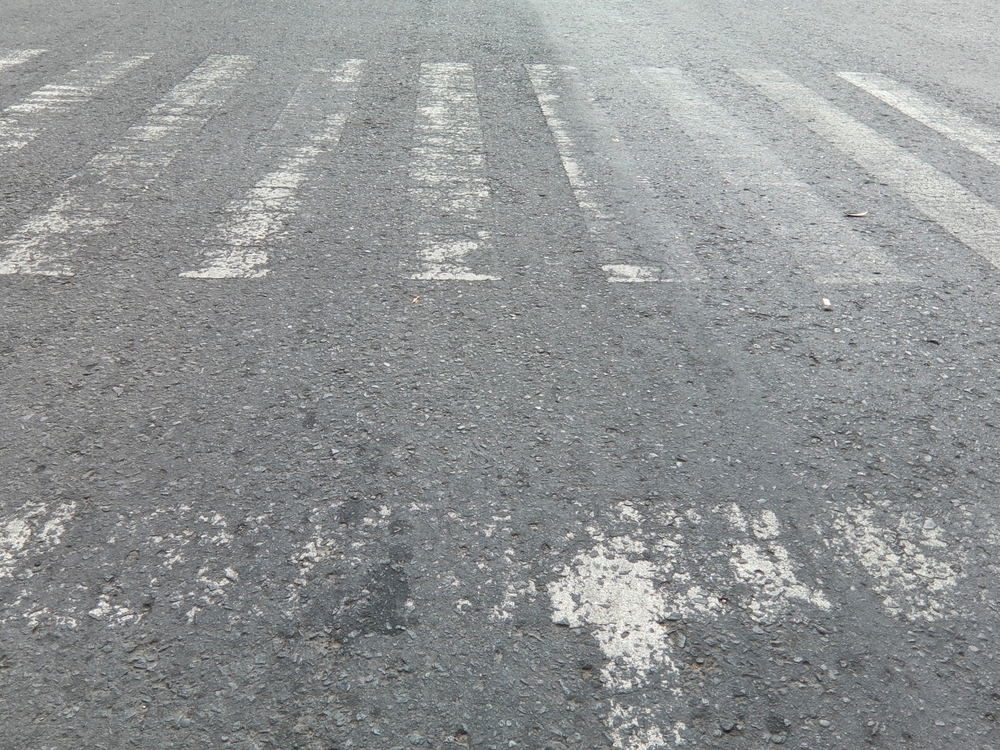

Most of us rely on road markings every day without giving them a second thought. Centre lines, give way markings, stop lines, lane arrows and pedestrian crossings all play an important role in helping road users navigate safely. However, as markings wear away through age, weather and traffic, they can become difficult to see or disappear altogether, creating potentially dangerous situations for motorists, cyclists and pedestrians.
Recent research suggests that faded road markings are becoming an increasingly significant road safety concern across the UK. According to research carried out for the RAC, 21% of drivers say that most road markings in their local area have faded away, while a further 71% say some markings have disappeared. Nearly three-quarters (72%) of drivers believe the problem has become worse over the last five years, and 92% consider faded road markings to have made driving more dangerous.
Road markings are far more than simple paint on the road surface. They provide crucial information about traffic flow, road layout, hazards, speed restrictions and priority. When they become unclear, motorists can be forced to make split-second decisions without the guidance they would ordinarily expect to have.
Some of the most commonly reported faded markings identified in the RAC research include:
- Centre carriageway lines separating traffic lanes (50%)
- Lane divider lines (49%)
- Directional arrows at junctions and roundabouts (48%)
- “Give Way” markings (44%)
- Yellow box junction markings (43%)
- Stop lines at junctions (41%)
- Speed limit signs painted on the road (36%)
The consequences can be significant. Nearly two-thirds of drivers (63%) reported having to guess where lanes were because markings were no longer visible. More than one-third (38%) said they had ended up in the wrong lane, whilst 16% reported experiencing a near miss as a result of faded markings. A further 13% said they had overshot a junction because stop lines or give way markings could no longer be clearly seen.
Is it illegal for road markings to be faded?
There is no specific law stating that every faded road marking is automatically illegal. However, highway authorities have legal duties to maintain the public highway and take reasonable steps to ensure roads are safe for users.
The importance of clear road markings is recognised throughout the UK’s road traffic legislation and guidance. The Road Traffic Act 1988 places responsibility on road authorities in relation to road safety, and inadequately maintained road markings may become relevant where they contribute to a collision or injury. Where markings have faded to such an extent that they no longer provide effective guidance, this may raise questions as to whether the relevant authority has fulfilled its maintenance obligations.
Responsibility for maintenance will depend upon the location. Public roads are generally maintained by the relevant local highway authority, while private roads and car parks will usually fall under the responsibility of the landowner or occupier.
Can you claim compensation if faded road markings contributed to an accident?
Every case will depend on its individual facts, but it may be possible to pursue a claim where poorly maintained road markings have contributed to a collision and injury.
To succeed in a claim, it is usually necessary to show that:
- The responsible authority or landowner owed a duty of care.
- The road markings were inadequately maintained.
- The inadequate markings contributed to the accident.
- The accident caused injury or loss.
Evidence can be particularly important in these cases. Photographs of the road markings, witness evidence, dashcam footage, police reports and maintenance records may all assist in establishing how the accident occurred and whether the condition of the road markings played a role.
Whilst not every accident occurring where markings are faded will result in liability, road users are entitled to expect that highways and other traffic areas are maintained to a reasonable standard.
Why does this matter?
Road safety campaigns often focus on major infrastructure projects, vehicle technology and driver behaviour. Yet something as simple as road paint can play a vital role in preventing collisions.
The RAC’s findings highlight the scale of the issue. An overwhelming 84% of drivers believe road safety in their area would improve if road markings were repainted, while 91% say local authorities should do more to ensure road markings remain clearly visible. Separate RAC research also found that faded road markings rank alongside poor drainage as the second biggest road safety concern after potholes.
Clear, visible road markings help drivers make safe decisions, reduce confusion and improve safety for all road users. When they are allowed to deteriorate, the consequences can be far more serious than a simple maintenance issue.
How we help clients
At Enable Law, our specialist personal injury team represents people who have been injured as a result of the negligence of others. Road traffic collisions can have devastating consequences, leading to serious injuries, financial losses and long-term changes to daily life.
If you or a loved one have been injured in a collision where poor road maintenance, including faded or missing road markings, may have been a contributing factor, call us today for a free, confidential discussion with a member of our team. When we agree to take on a case, we do so on a no-win-no-fee basis, meaning our clients never have to pay for our work out of pocket.