
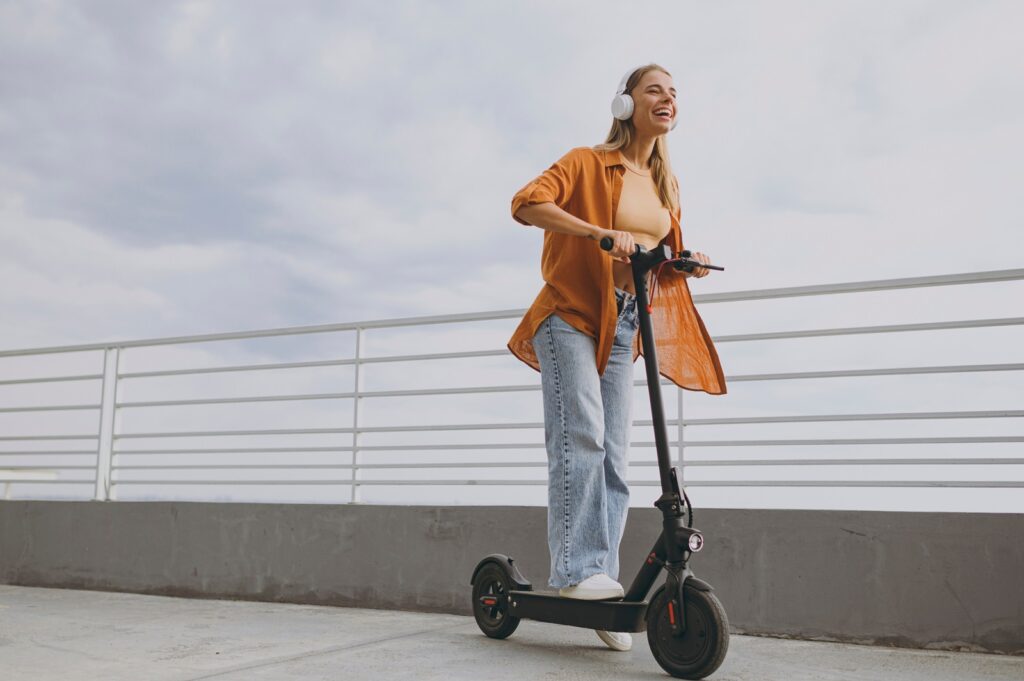

E-scooters have become an increasingly common sight in cities across the UK. Their ease of use, convenience and low cost make them especially popular with students and urban commuters. However, rising popularity has come with concerns from both pedestrians and riders about safety, as well as confusion surrounding their legal status. E-scooters are often used in shared pedestrian spaces, they behave similarly to bicycles, yet they are also motorised. So, what does the law actually say, and how can you stay safe?
E-scooter trials
Councils across the UK are currently taking part in government-supported e-scooter trials. These schemes allow riders with a full or provisional driving licence to hire an e-scooter. Under the Road Traffic Act 1988, e-scooters are classed as motor vehicles, meaning the same rules that apply to motor vehicles also apply to them. When signing up, you must provide your licence details, be properly insured and follow all traffic laws, including those relating to riding under the influence and obeying red lights.
Operators have also introduced safety measures to protect riders and other road users. Trial scooters have a maximum speed of 15.5 mph, with automatic reductions in certain designated areas identified by councils and the police. Some operators, such as VOI, also use no-ride zones, where scooters automatically slow to a stop, and dedicated parking areas.
Privately owned e-scooters
The use of privately owned e-scooters on public land remains illegal. Because e-scooters are classified as motor vehicles, riders must be licensed and insured; however, private insurance for e-scooters is not available. As a result, anyone riding a private scooter on public roads risks a £300 fine and up to six points on their licence.
Privately owned e-scooters also lack the built-in safety features required for trial schemes, meaning they can exceed legal speeds and may be used in pedestrian-heavy areas; posing a risk to both riders and the public. Private e-scooters may only be used on private land with the landowner’s permission.
Staying safe on e-scooters
E-scooter riders are vulnerable compared with other road users. Studies show that serious injuries tend to involve the head and limbs, and severe head injuries occur almost twice as often in e-scooter riders as in cyclists. Some research suggests e-scooter head injuries resemble motorcycle-type injuries more closely than cycling injuries, highlighting the significant risks involved.
Although helmets are not legally required, wearing one is strongly recommended. Choose a helmet that meets current safety standards, fits correctly and is securely fastened to reduce the risk of brain injury.
Other safety tips include:
- Wear bright or reflective clothing to stay visible.
- Avoid wearing headphones so you can hear your surroundings.
- Never carry passengers or tow items.
- Secure bags or other items so they don’t interfere with control.
- Avoid riding in poor weather, when braking distances increase and the risk of skidding is higher.
- Don’t use a mobile phone while riding.
To protect pedestrians and other road users, avoid riding on pavements and stick to approved roads. When parking, leave scooters close to walls, bike stands or racks, ensuring they stand securely without obstructing pavements, entrances, access ramps, traffic, bus stops or crossings.
Injured in an e-scooter incident? We can help
If you’ve been injured as an e-scooter rider or pedestrian, our expert personal injury team is here to support you. If your injury was caused by someone else’s negligence or carelessness, you may be entitled to compensation for medical expenses, lost earnings, and pain and suffering. For long-term injuries, you may also be able to access funds to help you rebuild your life as closely as possible to how it was before the incident.
Speaking with a qualified personal injury solicitor can help you understand your rights, guide you through the claims process and ensure your case is properly represented.
To speak with a member of our team, call us on 0800 044 8488 or fill in our contact form so we can arrange to call you at a time convenient to you.